
 Spotify
 Amazon Music
 PocketCasts
 Podcast Addict
 Deezer
 Player.fm
 Podchaser
 Listen Notes
 Apple Podcasts
 Overcast
 Castro
 CastBox
 Goodpods
 YouTube
Episode 22: Waiting on God – Simone Weil: An Incandescent Life
Description
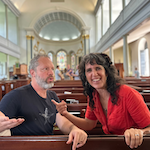
In this episode of Hot Takes on the Classics, Emily Maeda and Tim McIntosh close their season on love by turning to Simone Weil’s Waiting for God. Through a wide-ranging conversation, they explore Weil’s life as an “activist mystic,” her radical commitment to solidarity with the afflicted, and her understanding of attention as the heart of prayer, learning, and love of neighbor. The episode examines Weil’s reflections on affliction, consent to suffering, and the paradoxical joy that emerges when the self is emptied, situating her thought alongside figures such as Julian of Norwich, Plato, Dietrich Bonhoeffer, and George Herbert.
Episode Outline
- Opening quotation from Waiting for God and introduction to Simone Weil
- Weil’s historical context: a life spanning the two World Wars
- Simone Weil as “activist mystic”: solidarity, deprivation, and integrity
- Weil’s intellectual brilliance and philosophical formation
- Encounters with suffering: factory work, war, and social marginalization
- Waiting for God as a book of letters and essays
- Letters to Father Jean-Marie Perrin and Weil’s struggle with baptism
- Attention as the core of prayer, education, and love
- Affliction (malheur) and consent to the void
- Joy, suffering, and supernatural reversal
- Weil’s encounter with George Herbert’s “Love (III)”
- Closing reflections on mysticism, activism, and transformed love
Key Topics & Takeaways
- Attention as Prayer: For Simone Weil, attention is not an act of willpower but a receptive openness. Taken to its highest degree, attention becomes prayer and prepares the soul to receive God.
- Affliction and the Void: Weil understands affliction as more than physical suffering—it annihilates the ego and creates an empty space in which God alone can enter.
- Consent Rather Than Escape: Spiritual transformation comes not from avoiding suffering but from consenting to it without illusion, allowing a mysterious reversal to occur.
- Education and Desire: True learning occurs through attention and is driven by desire and joy, echoing insights found in Plato and later educators like Charlotte Mason.
- Love of Neighbor as Creative Attention: Weil insists that genuine love recognizes the afflicted not as categories but as persons, offering presence and attention as acts of love.
Questions & Discussion
- What does Simone Weil mean by “waiting for God”?
Consider how waiting differs from asking, striving, or controlling, and how this challenges modern ideas of prayer and productivity. - How does Weil redefine attention in both education and spiritual life?
Reflect on how her understanding of attention contrasts with the modern “attention economy.” - What role does affliction play in spiritual transformation?
Discuss whether Weil’s insistence on consent to suffering is compelling, troubling, or both. - How does Weil’s thought compare to other mystics discussed this season, such as Julian of Norwich?
Explore similarities and differences in how they understand suffering, joy, and divine love. - What does it mean to love one’s neighbor through attention?
Consider the practical implications of Weil’s claim that attention itself is an act of love.
Suggested Reading
- Waiting for God by Simone Weil
- Simone Weil’s The Iliad or the Poem of Force by Simone Weil
- Revelations of Divine Love by Julian of Norwich
- The Republic by Plato translated by Allan Bloom
- The Cost of Discipleship by Dietrich Bonhoeffer
- The Temple, “Love (III)” by George Herbert
- Devotchka