
 Apple Podcasts
 Spotify
 Amazon Music
 Podcast Addict
 Deezer
 Player.fm
 Listen Notes
 Podchaser
 RSS
RSS YouTube
Episode 59: American Education: What It Was and Can Be Again
Description
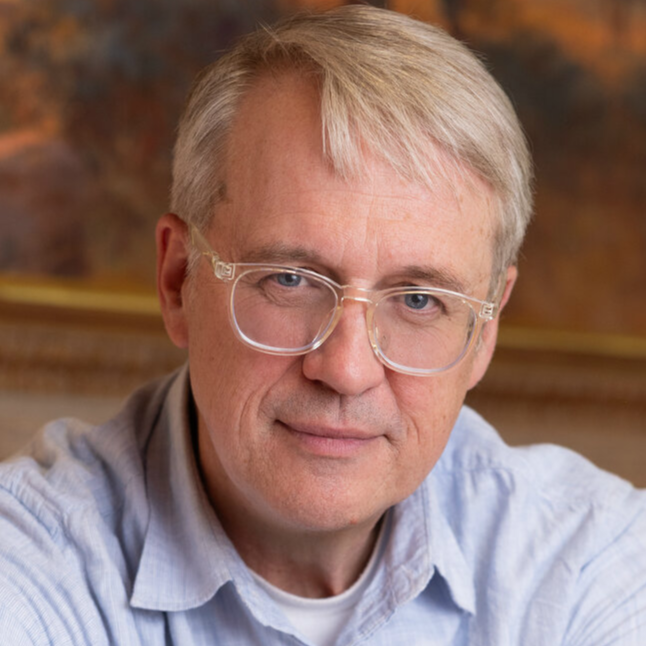
Recorded at the 2026 Great Hearts National Symposium on February 25, 2026, this edited episode features Christopher Perrin’s keynote speech exploring the history, meaning, and renewal of classical education, asking a foundational question: what exactly are we trying to recover? Drawing from sources as diverse as Augustine, Herodotus, Tocqueville, and C.S. Lewis, he traces the transmission of the liberal arts from ancient Greece and Rome through Christendom and into early America. Along the way, Perrin reflects on the gradual fragmentation of this tradition in the modern era, illustrated through the story of the Adams family and the rise of progressive education.
Perrin challenges educators to embrace the humility at the heart of true learning—that the more we know, the more we recognize our ignorance—and to see themselves as perpetual students. The episode also highlights the remarkable resurgence of classical education today, describing it as a reawakening of seeds long buried but now beginning to flourish. Perrin emphasizes that education is not merely a science or technique, but the transmission of a living tradition aimed at forming wisdom, virtue, and love. Listeners will come away with a renewed sense of purpose, encouraged to tend the “fire” of learning and to participate faithfully in handing down a rich inheritance to the next generation.
Special thanks to the Great Hearts Institute.
Episode Outline
- Why the question “What is classical education?” is harder than it sounds (and why it matters for renewal)
- The paradox of learning: the more you know, the more you know you don’t know
- “Begin with the end”: death, wisdom, and the purpose of education
- Tradition as “handing down”: language, culture, and education as inheritance
- Athens and Rome: Greek paideia, Roman educatio, and the liberal arts as a transmitted curriculum
- The Church and Christendom: incorporating Greco-Roman learning, theology as “queen,” and widening access
- England to early America: grammar schools, Boston Latin, Harvard, and the rise of popular literacy
- The Adams family as an educational case study: formation, thinning, and the modern fracture
- Progressive education: what changed, what was gained, and why education can’t be reduced to a quantitative science
- The modern renewal: early schools (1979–1981), today’s ecosystem, and the need for teacher formation at scale
- Final exhortation: preserve humility, avoid pride, resist false dichotomies, and tend the “fire” of wonder in schools
Key Topics & Takeaways
- Classical education is a tradition before it is a “renewal.” A renewal only makes sense if we can name what is being renewed.
- Teachers must be perpetual students. The classical teacher models humility—seeking wisdom while resisting the pretense of having arrived.
- Education is measured by ultimate aims. Human life is fleeting; education gains its meaning from what it prepares us for—virtue, wisdom, piety, and a life rightly ordered.
- Tradition is unavoidable. Even rejecting tradition requires using language and capacities that were first handed down as a tradition.
- The liberal arts are an inheritance with a genealogy. From Greek and Roman culture through Christian adaptation, the arts endure because they correspond to human nature.
- Modern fragmentation reshaped education’s purpose. When technology and “force” become central categories, education shifts from transmitting culture to preparing for flux.
- Progressive vs. classical is not a simple binary. Many educational “heresies” are partial truths held out of balance (false dichotomies distort practice).
- The renewal must be sustained by love, not mere critique. A movement fueled only by opposition cannot endure—formation requires positive vision and shared goods.
- Classical education belongs to humanity. It is deeply shaped by Christianity, but not owned exclusively by Christians; it welcomes seekers and strangers.
Questions & Discussion
- Why do you think “classical education” is so difficult to define clearly?
Name what you most often hear from parents or colleagues when they ask what “classical” means. Try writing a two-sentence definition that includes both aim (why) and means (how), then compare with others. - How does the “perpetual student” posture change the way you teach?
Where are you tempted to project certainty or expertise instead of wonder and humility? Identify one practice that would help your faculty model learning (shared reading, teacher seminar, public “I don’t know yet”). - What is education for when you “begin with the end” (mortality in view)?
How does remembering death sharpen what matters in curriculum and school culture? If you had to prioritize one outcome—wisdom, virtue, piety, civic responsibility—what would you choose and why? - What can we learn from the Adams family arc—formation to fracture?
In your own experience, where do you see education becoming “garments that no longer fit”? Does your school respond by adapting the form—or by recovering the measure of the human person? - What kind of “renewal energy” actually sustains a school long-term?
Where does your community rely on critique of modern schooling rather than a positive vision? Identify one “beauty practice” (music, poetry, liturgy, feast, shared reading) that could rekindle joy and friendship.
Suggested Reading & Resources
- The Liberal Arts Tradition by Kevin Clark, DLS, and Ravi Scott Jain
- An Introduction to Classical Education: A Guide for Parents by Christopher A. Perrin, MDiv, PhD
- Humanitas
- An Essay Toward Education by W. H. H. Kane
- From Dawn to Decadence by Jacques Barzun
- Democracy in America by Alexis de Tocqueville
- The Education of Henry Adams by Henry Adams
- The Value of the Classics by Andrew West (ed.)
- Address to Young Men on Reading Greek Literature by Basil of Caesarea
- Great Hearts Institute
- Classical Academic Press
- ClassicalU
- ClassicalU Course: The Liberal Arts Tradition
- ClassicalU Course: Classical Education History and Introduction
- ClassicalU Course: Introduction to Classical Education
- ClassicalU Course: A Brief History of Classical Education