 Spotify
 Amazon Music
 PocketCasts
 Podcast Addict
 Deezer
 Player.fm
 Podchaser
 Listen Notes
 Apple Podcasts
 Overcast
 Castro
 CastBox
 Goodpods
 YouTube
Episode 5: The Turn of the Screw: Horror Stories for Children – Henry James
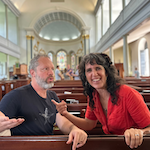
In this episode of Hot Takes on the Classics, Emily Maeda and Tim McIntosh explore Henry James’s The Turn of the Screw, a psychologically complex ghost story that challenges idealized visions of childhood innocence. They discuss James’s elaborate prose, the governess’s uncertain perceptions, the sinister influence surrounding Miles and Flora, and the story’s unresolved tension between supernatural evil and psychological instability. The conversation also considers how impressionable children can be shaped by the adults and forces around them.
Episode Outline
- Henry James’s life between America and Europe
- James’s elaborate prose and place between realism and modernism
- The influence of psychology and uncertain perception on his fiction
- The Christmas Eve frame story and the governess’s manuscript
- The governess’s arrival at Bly and her idealized view of Miles and Flora
- Peter Quint, Miss Jessel, and the possibility of supernatural corruption
- Whether the governess is a reliable narrator
- The children’s secrecy, intelligence, and manipulation
- The ambiguous deaths and unresolved meaning of the ending
- Parallels with Charlotte Brontë’s Jane Eyre
- Schubert’s “Erlkönig” as a musical companion
- Childhood innocence, impressionability, and the influence of evil
Key Topics & Takeaways
- Childhood in a Sinister Key: James offers a darker counterpoint to Wordsworth’s ideal of childhood innocence, portraying children as vulnerable, secretive, and capable of manipulation.
- Unreliable Perception: Because the story reaches readers through the governess’s account, every supernatural event remains entangled with her fears, desires, and interpretations.
- The Power of Negative Influence: Miles and Flora suggest how childhood gifts and innocence can be distorted by corrupting adults or supernatural forces.
- Ambiguity as Horror: James creates dread by withholding certainty; readers cannot fully determine whether the ghosts are objectively real or products of the governess’s mind.
- Gothic Inheritance: The isolated country house, hidden history, troubled governess, and mysterious figures connect the novella closely to Jane Eyre and the Gothic tradition.
Questions & Discussion
- Is the governess a reliable narrator?
Consider how her attraction to the children’s guardian, her isolation, and her increasingly intense interpretations shape the story she tells. - Are Peter Quint and Miss Jessel real ghosts?
Discuss which details support a supernatural reading and which suggest that the apparitions may arise from the governess’s imagination. - How does the story complicate idealized views of childhood?
Reflect on Miles and Flora as innocent, impressionable, calculating, or some combination of all three. - Why is ambiguity so effective in a ghost story?
Consider whether greater certainty would make the story more frightening or less psychologically unsettling. - How closely does The Turn of the Screw resemble Jane Eyre?
Compare the governess narrators, isolated estates, hidden histories, Gothic atmosphere, and threatening figures associated with the house.
Suggested Reading & Resources
- The Turn of the Screw by Henry James
- “Ode: Intimations of Immortality” by William Wordsworth
- The Portrait of a Lady by Henry James
- The Bostonians by Henry James
- Daisy Miller by Henry James
- The Golden Bowl by Henry James
- A Passage to India by E. M. Forster
- Howards End by E. M. Forster
- A Room with a View by E. M. Forster
- The Varieties of Religious Experience by William James
- The Gambler by Fyodor Dostoevsky
- Crime and Punishment by Fyodor Dostoevsky
- Anna Karenina by Leo Tolstoy
- The Count of Monte Cristo by Alexandre Dumas
- “Erlkönig” by Franz Schubert
- Jane Eyre by Charlotte Brontë
- Four Quartets by T. S. Eliot
- The Waste Land by T. S. Eliot
- Carrie by Stephen King
- My Name is Søren Kierkegaard by Tim McIntosh
- Devotchka
- Substack
- Visit TrueNorth.fm