 Spotify
 Amazon Music
 PocketCasts
 Podcast Addict
 Deezer
 Player.fm
 Podchaser
 Listen Notes
 Apple Podcasts
 Overcast
 Castro
 CastBox
 Goodpods
 YouTube
Episode 6: Araby: by James Joyce
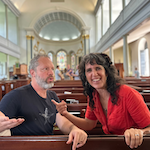
In this episode of Hot Takes on the Classics, Emily Maeda and Tim McIntosh begin their exploration of adolescence with James Joyce’s “Araby”, a story of youthful longing set against the drab, paralyzed world of Dublin. Tim and Emily discuss the unnamed boy’s intense attraction to Mangan’s sister, the religious and chivalric language through which he understands his desire, and the painful disillusionment that awaits him at the bazaar. The conversation also considers Joyce’s development from the realism of Dubliners to the experimental modernism of Ulysses and Finnegans Wake, his fascination with ordinary experience, and the lasting influence of Catholic imagery, ritual, and symbolism on his writing.
Episode Outline
- Adolescence as the next stage in the podcast’s exploration of the human life cycle
- James Joyce’s reputation for difficult modernist writing and the more accessible realism of Dubliners
- The difficult publication history of Dubliners and Ezra Pound’s support of Joyce
- Joyce’s portrayal of Dublin as a drab city marked by spiritual and social paralysis
- The unnamed boy’s intense attraction to Mangan’s sister and the experience of adolescent longing
- Religious, liturgical, and chivalric imagery surrounding the boy’s idealized love
- The journey to the Araby bazaar as a romantic quest that ends in disappointment and disillusionment
- Exotic Eastern imagery and the contrast between imagined enchantment and tawdry modern reality
- Paralysis as a recurring theme across Dubliners, including “The Sisters” and “Eveline”
- Joyce’s literary progression from Dubliners to A Portrait of the Artist as a Young Man, Ulysses, and Finnegans Wake
- Stream of consciousness, Catholic symbolism, and Joyce’s effort to elevate ordinary embodied experience
- Joyce’s conflicted relationship with Irish Catholicism
Key Topics & Takeaways
- Adolescence as Idealization and Awakening: The boy’s attraction to Mangan’s sister is more than a casual crush.
- Desire in a Paralyzed World: The vitality of the boy’s longing stands in sharp contrast to the stagnant Dublin around him.
- The Collapse of Romantic Enchantment: The bazaar initially seems to promise exotic beauty and an opportunity for heroic devotion, but the boy encounters closing stalls, indifferent adults, and cheap merchandise.
- Modernism and the Sacred Ordinary: Joyce’s later experimental style can be understood not simply as obscurity for its own sake but as an effort to represent consciousness and ordinary embodied experience more completely.
- Joyce’s Inescapably Catholic Imagination: Although Joyce criticizes Irish Catholicism, his fiction remains saturated with Catholic symbols, ritual, sacramental language, and patterns of thought.
Questions & Discussion
- Is “infatuation” the right word for the boy’s feelings toward Mangan’s sister?
Consider whether his feelings are merely romantic attraction or whether the religious, chivalric, and devotional language of the story transforms them into something more significant. - What exactly does the boy discover at the end of “Araby”?
Discuss whether his disappointment is primarily about Mangan’s sister, the bazaar, his own vanity, the adult world, or the collapse of his adolescent imagination. - What does the exotic imagery surrounding “Araby” contribute to the story?
Consider why the imagined East seems capable of bringing color and enchantment into Joyce’s lifeless Dublin and why that promise ultimately fails. - Does Joyce’s experimental modernism make ordinary experience more meaningful or merely more difficult to read?
Compare the accessible realism of “Araby” with the stream of consciousness techniques discussed in connection with Ulysses and Finnegans Wake.
Suggested Reading & Resources
- “Araby” by James Joyce Audible edition
- “Araby” by James Joyce
- Dubliners by James Joyce
- “The Dead” by James Joyce
- “The Sisters” by James Joyce
- “Eveline” by James Joyce
- A Portrait of the Artist as a Young Man by James Joyce
- Ulysses by James Joyce
- Finnegans Wake by James Joyce
- The Turn of the Screw by Henry James
- Romeo and Juliet by William Shakespeare
- My Name is Søren Kierkegaard by Tim McIntosh
- Devotchka
- Substack
- Visit TrueNorth.fm