 Spotify
 Amazon Music
 PocketCasts
 Podcast Addict
 Deezer
 Player.fm
 Podchaser
 Listen Notes
 Apple Podcasts
 Overcast
 Castro
 CastBox
 Goodpods
 YouTube
Episode 14: Hot Takes on Classical Education
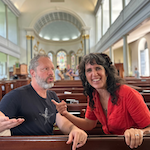
In this special spouses episode of Hot Takes on the Classics, Tim McIntosh and Emily Maeda are joined by Gaelyn Hurd and Mark Maeda to ask two deceptively simple questions: What is classical education, and what convinced each of them that it was worth pursuing? Their answers range across the great conversation, the classical canon, grammar, dialectic, rhetoric, Latin, history, virtue, wonder, and the relationship between curriculum and method. Along the way, they reflect on their own schooling, homeschooling and hybrid school experiences, memorable encounters with poetry and great books, and the importance of helping students see knowledge as an interconnected whole. The episode closes by surveying the rapid growth of the classical education movement and asking whether the renewal is moving from a pioneering phase into a new institutional era.
Episode Outline
- Why this meta episode: four perspectives on what classical education is and why it matters
- Gaelyn Hurd’s definition through guideposts: historical context and a shared cultural language, virtue and whole person formation, awe before great thinkers and works, and confidence in rhetoric, dialogue, and debate
- Tim McIntosh’s definition: a method that engages the best that has been written and said, assumes an underlying and understandable logos, and orders education toward right action and virtue more than the accumulation of knowledge
- Mark Maeda’s definition: leading students into the great conversation through time tested works in literature, history, science, math, and Latin, using grammar, logic, and rhetoric to cultivate love of the good, true, and beautiful
- Emily Maeda’s definition: an education centered on the great conversation, including the best ideas, words, and artistic creations, approached primarily through grammar, dialectic, and rhetoric
- Curriculum and method: the shared canon, Latin and foundational studies, and the goal of teaching students how to learn
- Common misconceptions: classical education as merely old, impractical, elitist, overly rigorous, or disconnected from contemporary life
- Conversion moments and synthesis: Classical Conversations, the CiRCE Conference, embodied poetry, great books, and the work of connecting history, literature, science, philosophy, and language
- The growth of the classical renewal and the possible transition from a pioneering movement into a new institutional phase
Key Topics & Takeaways
- Classical Education Is Ordered Toward a Good Life: Across the four definitions, knowledge is not treated as an end in itself. History, books, languages, and intellectual skill are meant to form judgment, virtue, responsible action, and a capacity to love what is good, true, and beautiful.
- The Great Conversation Requires Both Content and Method: The episode resists reducing classical education either to a list of old books or to a teaching technique. A shared inheritance matters, but so do the habits by which students receive, question, synthesize, speak about, and eventually inhabit that inheritance.
- Foundations Create Freedom: Grammar, timelines, Latin, phonics, and other elemental skills can look restrictive or old fashioned, but the speakers repeatedly describe them as scaffolding. Mastery of basic structures gives students a framework for later independence, synthesis, and confident learning.
- Education Should Reconnect the Parts to the Whole: A recurring criticism of modern schooling is fragmentation: history, science, literature, philosophy, and language are often taught as separate domains. Classical education is presented as repeatedly moving between particular knowledge and a larger pattern so that students understand how ideas and disciplines shape one another.
- The Classical Renewal Is Entering a New Phase: The closing statistics are offered as snapshots rather than a definitive census, but they support the speakers’ sense that classical education has moved far beyond a small pioneer movement. The central question is becoming not only how to recover classical education, but how to sustain and institutionalize it without losing its animating vision.
Questions & Discussion
- Is classical education primarily a curriculum or a method?
Consider what would be lost if classical education were reduced either to a canon of texts or to the grammar dialectic rhetoric sequence. What combination of content, pedagogy, and disposition seems essential? - What makes a work “classical” rather than simply old?
Discuss the role of time, critical consensus, enduring human questions, artistic excellence, and cultural inheritance in deciding which works belong in the great conversation. - Why should education aim at virtue rather than knowledge alone?
Explore the claim that the goal of education is not simply to know more, but to act well. How should a school cultivate virtue without turning moral formation into slogans or compliance? - How much foundational structure is necessary for genuine intellectual freedom?
Use the episode’s examples of grammar, Latin, phonics, historical timelines, memorization, and rhetoric. When does structure become liberating, and when can it become merely mechanical? - What could be gained or lost as the classical education movement becomes more institutional?
If the movement is shifting from a pioneering phase into a period of larger schools, graduate programs, testing systems, publishers, and organizations, what practices or convictions most need to be protected?
Suggested Reading & Resources
- Climbing Parnassus by Tracy Lee Simmons
- The Lost Tools of Learning by Dorothy Sayers
- The Complete Works of Francis Schaeffer by Francis Schaeffer
- Leaves of Grass by Walt Whitman
- The Iliad and The Odyssey by Homer
- The Sonnets and a Lover’s Complaint by William Shakespeare
- Classical Learning Test (CLT)
- CiRCE Institute
- Classical Academic Press
- Classical Conversations
- Great Hearts America
- Great Hearts Academies
- My Name is Søren Kierkegaard by Tim McIntosh
- Devotchka
- Substack