 Spotify
 Amazon Music
 PocketCasts
 Podcast Addict
 Deezer
 Player.fm
 Podchaser
 Listen Notes
 Apple Podcasts
 Overcast
 Castro
 CastBox
 Goodpods
 YouTube
Episode 2: Intimations of Immortality: Childhood’s Remembering
Description
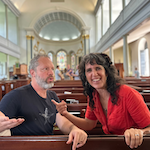
In this episode of Hot Takes on the Classics, Emily Maeda and Tim McIntosh begin their season on the stages of life with William Wordsworth’s “Ode: Intimations of Immortality from Recollections of Early Childhood.” They explore the Romantic movement’s response to the Enlightenment, Wordsworth’s vision of childhood as a uniquely perceptive stage of life, and the poem’s claim that children possess an awareness of transcendent realities adults gradually lose. Along the way, they discuss poetic form, the influence of Neoplatonism, and whether nature can restore our vision of the eternal.
Episode Outline
- Opening quotation from Wordsworth’s “Ode: Intimations of Immortality”
- Introducing the Romantic poets and their response to the Enlightenment
- Why William Wordsworth stands apart from Byron, Shelley, and Keats
- Nature, imagination, and the Romantic vision of reality
- Understanding the ode as a poetic form
- Close reading of the poem’s opening stanzas and the “problem” of lost glory
- Childhood as humanity’s closest glimpse of eternity
- The poem’s Neoplatonic vision of memory, nature, and immortality
- The enduring beauty—and philosophical tension—of Wordsworth’s vision
- Reflections on Gustav Klimt’s Baby and George MacDonald’s “Baby”
Key Topics & Takeaways
- Romanticism as a Response to the Enlightenment: Wordsworth and the Romantic poets challenged the Enlightenment’s emphasis on reason, science, and mechanism by recovering imagination, beauty, emotion, and nature as ways of knowing reality.
- Childhood as a Window into the Eternal: Wordsworth argues that children possess an intuitive awareness of transcendent realities that gradually fades as adulthood, habit, and worldly concerns reshape human perception.
- Nature as a Sign Rather Than an End: Nature is not itself divine but serves as a reminder of humanity’s deeper origin and ultimate destiny, awakening “intimations of immortality.”
- The Beauty—and Limits—of Wordsworth’s Vision: The hosts admire the poem’s profound beauty while recognizing its strong Neoplatonic influence.
- Poetry Shapes Our Imagination: Wordsworth’s poem has profoundly influenced modern understandings of childhood, innocence, and human development, demonstrating literature’s lasting cultural power.
Questions & Discussion
- How should literature be organized around the stages of life? Discuss whether childhood, adolescence, adulthood, and old age provide a helpful framework for reading the classics, or whether another organizing principle might be more illuminating.
- Why does Wordsworth believe childhood possesses a clearer vision of reality than adulthood? Consider whether children genuinely perceive the world differently or whether adulthood simply changes what we notice and value.
- How did the Romantic poets challenge Enlightenment thinking? Discuss whether imagination, beauty, and emotion should complement scientific reason or serve as an alternative to it.
- What role does nature play in Wordsworth’s poem? Reflect on whether experiences in nature can awaken spiritual awareness, memory, or wonder in ways modern life often cannot.
- How should readers respond to the poem’s Neoplatonic ideas? Consider whether appreciating the poem’s beauty requires accepting its philosophical assumptions about the soul’s existence before birth.
- Why has this poem remained influential for more than two centuries? Discuss how Wordsworth’s understanding of childhood continues to shape modern ideas about innocence, education, and human flourishing.
Suggested Reading & Resources
- “Ode: Intimations of Immortality from Recollections of Early Childhood” by William Wordsworth
- Lyrical Ballads by William Wordsworth and Samuel Taylor Coleridge
- “Lines Composed a Few Miles above Tintern Abbey” by William Wordsworth
- Paradise Lost by John Milton
- “Kubla Khan” by Samuel Taylor Coleridge
- As You Like It (including the “Seven Ages of Man” speech) by William Shakespeare
- Baby by Gustav Klimt
- “Baby” by George MacDonald
- Devotchka