
 Apple Podcasts
 Spotify
 Amazon Music
 Podcast Addict
 Deezer
 Player.fm
 Listen Notes
 Podchaser
 RSS
RSS YouTube
Episode 64: Passing the Torch: Louis Markos on the Classical Christian Inheritance
Description
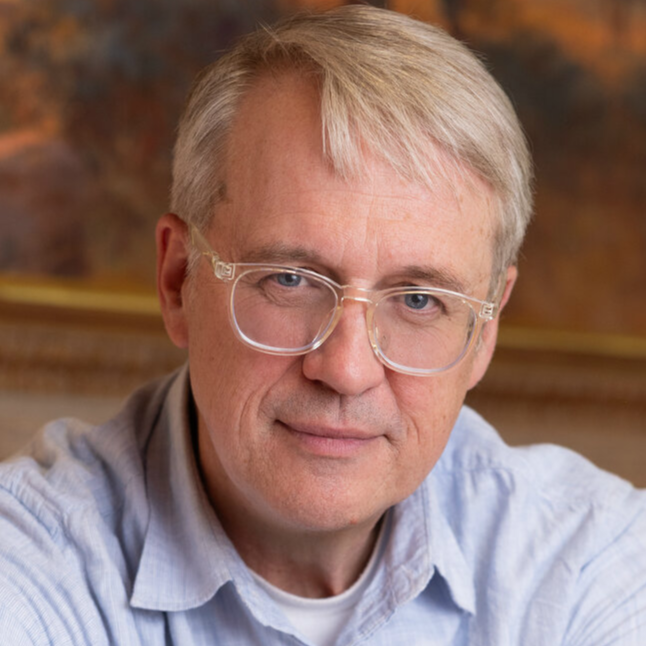
In this episode of The Christopher Perrin Show, Christopher Perrin welcomes Dr. Louis Markos for a wide-ranging conversation about the Greco-Roman, Judeo-Christian legacy and the renewal of classical Christian education. Markos traces how his Greek heritage, early love for Homer and Plato, Jewish mentors, and long academic vocation prepared him to defend and pass on the liberal arts tradition. The conversation explores why Christians can read pagan classics with discernment, how general revelation prepares cultures for special revelation in Christ, and why the church has often received, purified, and redirected what is true, good, and beautiful outside its visible borders. Perrin and Markos discuss Athens and Jerusalem, Tertullian and Augustine, Plato and Hebrews, Paul at the Areopagus, Dante, Milton, C. S. Lewis, Mortimer Adler, John Dewey, and the dangers of both progressivism and dead classicism. They also consider how classical Christian schools form students in virtue, courtesy, confidence, joy, and participation in the great conversation. The episode closes with Markos describing his forthcoming Dante project with Classical Academic Press and pointing listeners to his ClassicalU courses on Greek and Roman mythology and Dante.
Episode Outline
- Markos’s early formation: Greek heritage, Homer, Plato, Jewish mentors, and the call to become an English professor
- Bringing Athens and Jerusalem together: the Greco-Roman and Judeo-Christian inheritance in classical Christian education
- From Achilles to Christ and From Plato to Christ: pagan classics as preparation for the gospel
- Discernment and general revelation: why Christians can receive truth, goodness, and beauty outside the church
- Tertullian, Augustine, Basil, Aquinas, Calvin, and the church’s long debate over pagan learning
- Mission, culture, and baptism: plundering Egypt, reclaiming temples, and receiving what can be consecrated to Christ
- Progressivism, dead classicism, and the need for a living classical tradition ordered toward wisdom and virtue
- What classical Christian schools should cultivate: joy, confidence, courtesy, great books, and participation in the great conversation
Key Topics & Takeaways
- A Received Tradition: Markos’s love for the classical inheritance began through family, teachers, and reading. His Greek heritage, the Odyssey, Plato, and great mentors shaped his desire to pass on liberal education.
- Athens and Jerusalem: The episode centers on the union of the Greco-Roman and Judeo-Christian traditions. Markos argues that the pagan classics can prepare readers for Christ when received through Christian discernment.
- General Revelation and Discernment: Christians need not demonize every non-Christian source. General revelation means that God can speak through creation, reason, conscience, imagination, and culture, even though special revelation in Christ remains supreme.
- Receiving Without Syncretism: The church has often received and purified cultural goods without collapsing them into the gospel. The task is not to baptize everything, but to discern gold from dross.
- Classical Education as Formation: Markos contrasts true classical education with both progressivism and dead classicism. The goal is not mere drill, novelty, or college prep, but the formation of wisdom, virtue, eloquence, and rightly ordered loves.
- A Joyful School Culture: In a healthy classical Christian school, students show confidence without cockiness, courtesy without stiffness, joy in learning, and a sense that they belong to a larger conversation.
Questions & Discussion
- What does it mean to “pass the torch” of the classical Christian tradition?
Consider how Markos received the tradition through family, teachers, books, and mentors. Who helped hand this inheritance to you, and how might you hand it on to others? - How should Christians read pagan classics with discernment?
Discuss the difference between receiving what is true, good, and beautiful and uncritically baptizing everything in a culture. What examples from Homer, Plato, Virgil, or Dante help clarify this distinction? - Why is the distinction between general revelation and special revelation so important?
Reflect on how creation, conscience, reason, imagination, and culture can prepare people for the gospel while still requiring fulfillment in Christ and Scripture. - What dangers come from both dead classicism and progressivism?
Compare a school that treats drill as an end in itself with one that treats novelty, utility, or ideology as the goal. What would a living tradition look like instead? - What would you hope to see in the halls of a healthy classical Christian school?
Discuss Markos’s description of students marked by joy, confidence, courtesy, humility, vocabulary, quiet order, and participation in the great conversation. Which of these signs is most needed in your own context?
Suggested Reading & Resources
- Passing the Torch by Louis Markos
- From Achilles to Christ: Why Christians Should Read the Pagan Classics by Louis Markos
- From Plato to Christ by Louis Markos
- The Myth Made Fact by Louis Markos
- ClassicalU Course: Myth Made Fact
- ClassicalU Course: Dante’s Divine Comedy